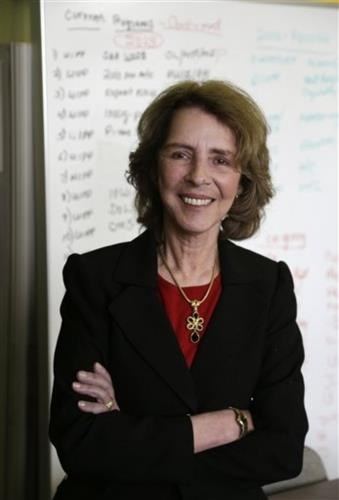

Ralph Nader
Consumer Advocate/Author ‘Only The Super-rich Can Save Us!’
Host: Basima Farhat
Previously Aired On: Tuesday, December 22, 2009 – Listen to the Show!
Ralph Nader is American’s most renowned and effective crusader for the rights of consumers and the general public, a role that has repeatedly brought him into conflict with both business and government.
Ralph Nader was born in Winsted, Connecticut to Nathra and Rose Nader, Lebanese immigrants who operated a restaurant and bakery. Nader’s dream of becoming a “people’s lawyer” was instilled in him in adolescence by his parents, who in noisy free-for-alls, conducted family seminars on the duties of citizenship in a democracy. Mark Green, a former Nader associate, said that “When (the Naders) sat around the table growing up, it was like the Kennedys. Except that the subject was not power but justice.”
Following his graduation in 1951 from Gilbert School, Nader entered the Woodrow Wilson School of International Affairs at Princeton University. Graduating magna cum laude in 1955, with a major in government and economics, Nader enrolled in Harvard Law School. He became an editor of the Harvard Law Review, and after graduating with honors, set up a small legal practice and traveled widely.
The young attorney became distressed by the indifference of American corporations to the global consequences of their actions, and he began to speak out against the abuse of corporate power. He first made headlines in 1965 with his book, Unsafe at Any Speed, which took the auto industry to task for producing unsafe vehicles. Nader became an American folk hero when executives of General Motors hired private detectives to harass him and then publicly apologized before a nationally televised Senate committee hearing.
The consumer advocate went on to create an organization of energetic young lawyers and researchers (often called “Nader’s Raiders”) who produced systematic exposés of industrial hazards, pollution, unsafe products, and governmental neglect of consumer safety laws. Nader is widely recognized as the founder of the consumers’ rights movement. He played a key role in the creation of the Environmental Protection Agency, the Occupational Safety and Health Administration, the Freedom of Information Act and the Consumer Product Safety Commission. He has continued to work for consumer safety and for the reform of the political system through his group Public Citizen.
For many years, Ralph Nader has harshly criticized the two major political parties for preserving a campaign finance system that makes them both dependent on wealthy contributors. In 1996 he appeared on the ballot in some states as the Presidential candidate of the Green Party, but ran a largely symbolic campaign, making only a handful of public appearances to promote his candidacy. He made a more substantial effort in 2000, running nationwide as the candidate of the Green Party. He won nearly three million votes nationwide, close to three percent of the votes cast.
After the closest presidential election in American history, many Democrats blamed Nader for their loss of the presidency. They speculated that had Nader not entered the race, they would have won enough of Nader’s voters in either Florida or New Hampshire to shift the balance of electoral victory in their favor. Despite opposition from many of his previous supporters, Ralph Nader ran for president again as an independent candidate in 2004. In February 2008, he announced that he would officially enter the presidential contest for the fourth time, as an independent candidate. He lives and maintains his offices in Washington, DC.
ABOUT ‘ONLY THE SUPER-RICH CAN SAVE US!’
“In the cozy den of the large but modest house in Omaha where he has lived since he started on his first billion, Warren Buffett watched the horrors of Hurricane Katrina unfold on television in early September 2005. . . . On the fourth day, he beheld in disbelief the paralysis of local, state, and federal authorities unable to commence basic operations of rescue and sustenance, not just in New Orleans, but in towns and villages all along the Gulf Coast. . . He knew exactly what he had to do. . .”
So begins the vivid fictional account by political activist and bestselling author Ralph Nader that answers the question, “What if?” What if a cadre of superrich individuals tried to become a driving force in America to organize and institutionalize the interests of the citizens of this troubled nation? What if some of America’s most powerful individuals decided it was time to fix our government and return the power to the people? What if they focused their power on unionizing Wal-Mart? What if a national political party were formed with the sole purpose of advancing clean elections? What if these seventeen superrich individuals decided to galvanize a movement for alternative forms of energy that will effectively clean up the environment? What if together they took on corporate goliaths and Congress to provide the necessities of life and advance the solutions so long left on the shelf by an avaricious oligarchy? What could happen?
This extraordinary story, written by the author who knows the most about citizen action, returns us to the literature of American social movements—to Edward Bellamy, to Upton Sinclair, to John Steinbeck, to Stephen Crane—reminding us in the process that changing the body politic of America starts with imagination.


now i’m affixing your signature to out of for the night time. expending sometimes using my spouse seeing that i prob will not likely find your ex boyfriend yet again until finally on the with the initially.
Comment by Gretchen Mozingo | September 6, 2011
These days there is too much garabage written on blogs, glad to see your blog has kept it is integrety. Thanks
Comment by slipped disc treatment | December 5, 2011